For 40 years, the International Piano Festival of La Roque d’Anthéron has established itself as an exceptional mainstay in the worldwide musical and pianistic scene, providing a unique experience in the nature.
Although other Festival venues have been added in recent years, the grounds of the Château de Florans remain the key site for unclassifiable encounters between all types of musical creation (classical, contemporary…), every style (jazz, electronic…) and all types of artists, with emerging talents alongside the greatest international performers.
The acoustic qualities of the stage, just as suitable for piano recitals as it is for concertos and symphonies, only add to the charms of this mythical and magical park, filled with the entire history of the Château de Florans.
Château de Florans Park's History
The « petit Château » and then the « grand Château » were built between 1598 and 1667 at the instigation of Annibal de Forbin who died in a duel in 1612. His widow, Camille de Grimaldi d’Antibes, was so distraught that she had a chapel built and a park laid out in his memory. The Château remained the property of the Forbins until 1818, when the buildings and land were sold to Louis Raphaël de Cordoue. One of his descendants, Caroline de Cordoue, married the Marquis de Florans, a native of Comtat-Venaissin. During the 19th century, the Château de Forbin became the Château de Florans. In 1937, the Marquise Marie de Florans, the last of her name and the only survivor of an era, bequeathed the family property to the Archbishopric of Aix-en-Provence. A decade later, in 1948, Paul Onoratini rented and renovated the Château, which he turned into a medical and dietary centre. He became the owner nine years later. Over time, the Centre Médical Soleil et Repos became the current Clinique du Château de Florans. Paul Onoratini was also behind the creation of the Festival in 1981, in the heart of Château de Florans Park.
The Park today
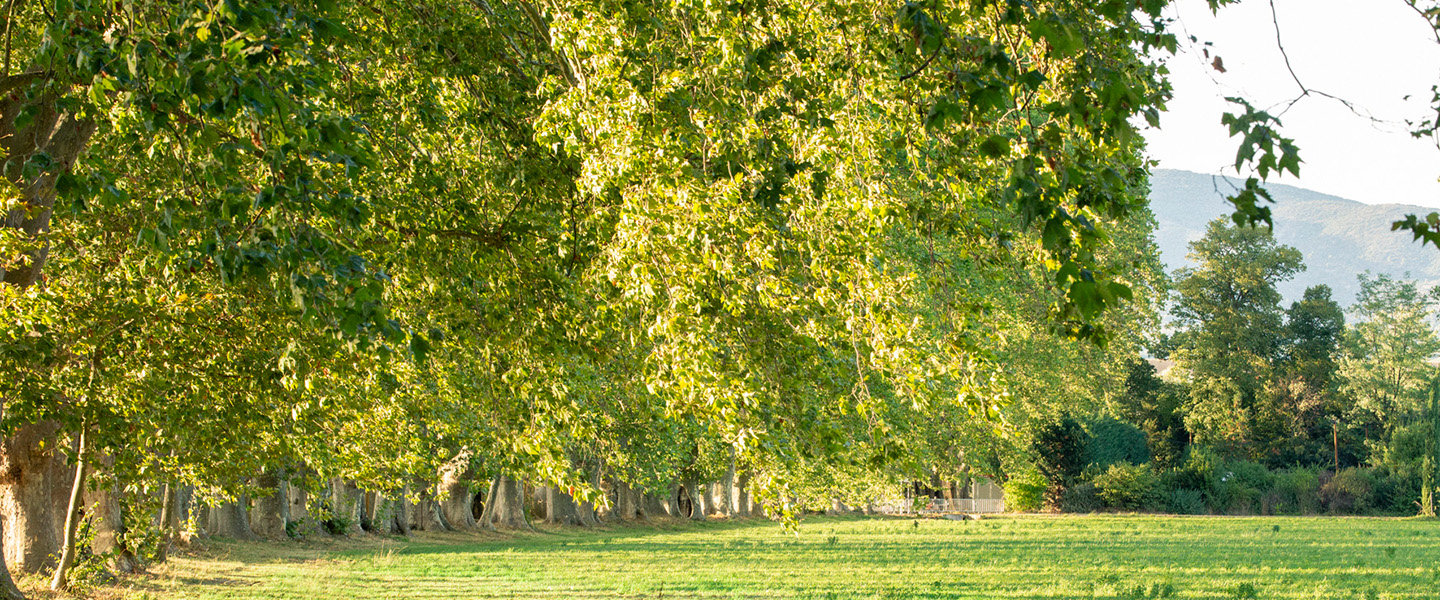
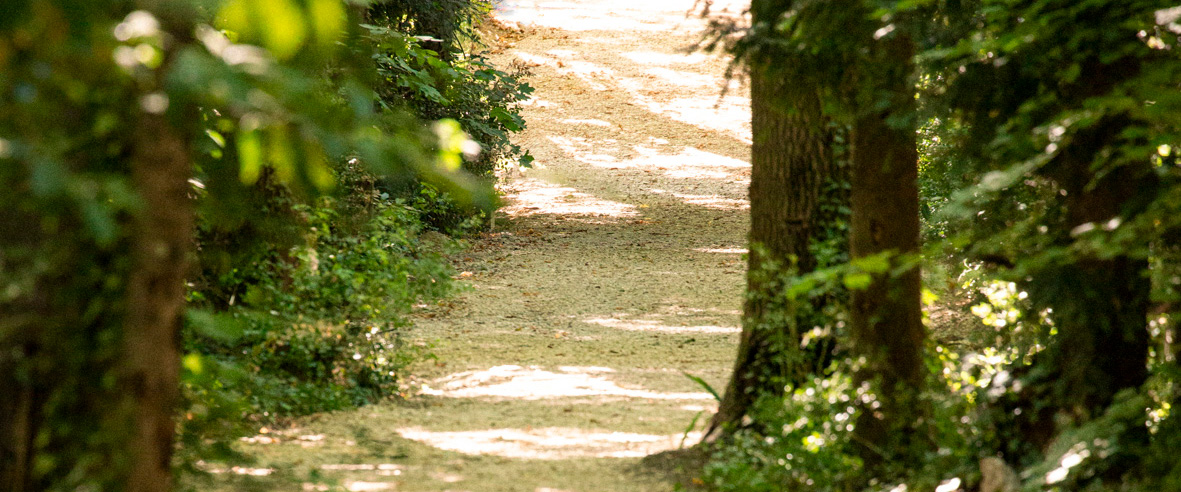
The plant composition of the Château de Florans Park is the result of a long historical process. It is one of the most beautiful parks with a built landscape, indeed many singular species make the Château de Florans Park unique in Provence and beyond.
The Auditorium is located in the heart of a clearing in a small wooded area to the south of the park. The presence of these species is probably due to the resilience of a plant labyrinth, created by Jean Baptiste de Forbin in the mid 17th century. Among these species, which are absent from the rest of the Mediterranean region, are Japanese laurels and Aralias, yews, hollies, lindens, hazel trees, broad-leaved fusains and many others. All these species have been able to flourish in the Park thanks to the constant irrigation provided by the Moulin canal which winds through the Park. Apart from the Auditorium grove, the most common tree specie lining two monumental alleys is the common plane. These hundred and fifty year old trees, of which there are 320, are the result of a hybrid between the Oriental plane and the American plane, which was very popular in the large parks built in the 19th century.
Among the emblems of the Festival, the giant sequoias were imported from America in the 19th century. They are the largest variety of tree in the world and the specimens in the Park are probably more than 150 years old. A third row of sequoïa was planted in the early 2000s.
In addition to the flora, the Park is home to several species of birds: Jackdaws, Blue and Chestnut Tits, Red Tails, Tree Finches, Magpies and Oak Jays, Woodpeckers and Orioles in the wooded part of the Park. When the sun goes down, tawny owls, barn owls and sometimes even great horned owls complete this fauna. The central meadow is eco-grazed by sheep every spring.
The Park of the Château de Florans is a unique and fragile ecosystem that must be protected, which is why the Park is closed to the public outside of festivals and its preservation is at the heart of our concerns.
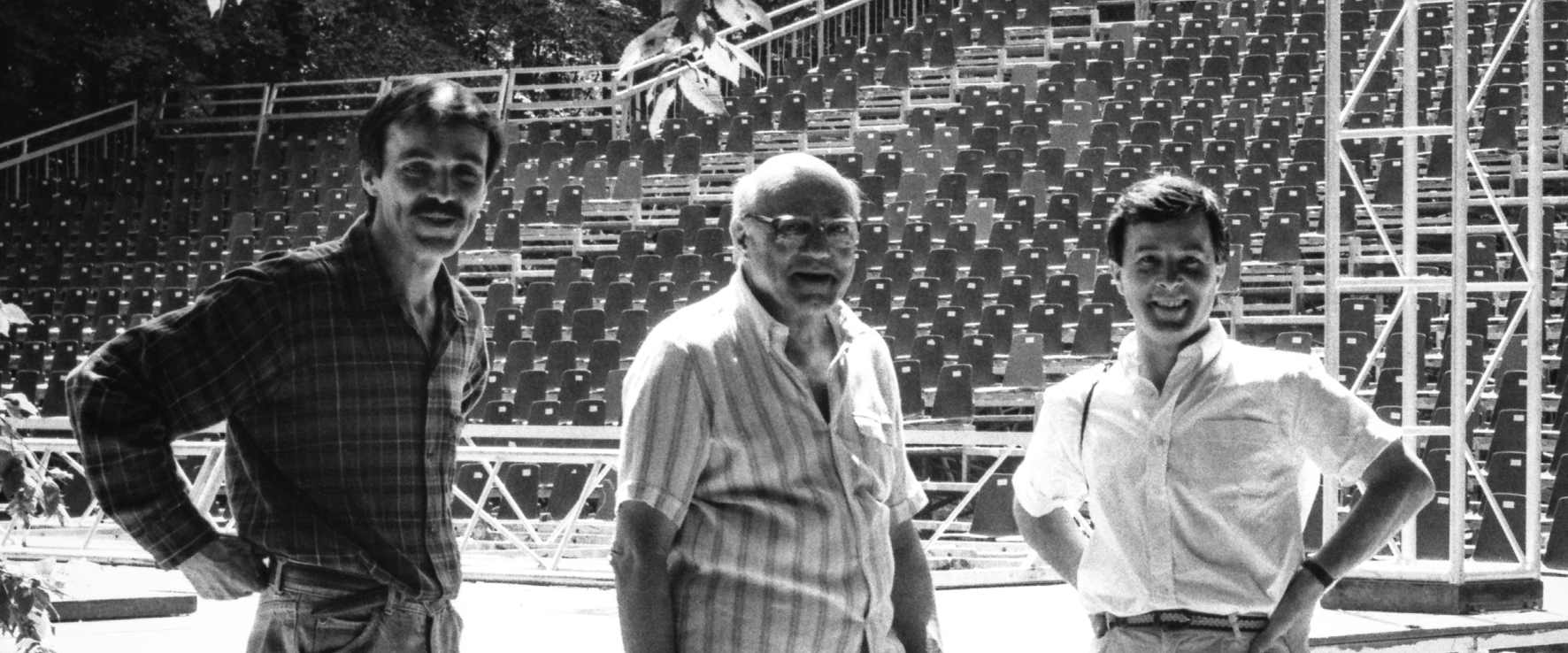
Bernard Onoratini, Paul Onoratini and René Martin
Festival's History
Paul Onoratini took a great interest in local life and was elected mayor of the commune of La Roque in 1959. In 1971, with the help of his son Bernard, an interior architect with a passion for the piano, he launched « Musique à Silvacane ». This first musical project was a series of seven concerts given at Silvacane Abbey each year. Soon, the DRAC (Direction Régionale de l’Action Culturelle) put Paul Onoratini in touch with René Martin, whose ambition was to create a piano festival in Aix or its surroundings. The discovery of the Parc de Florans gave him a glimpse of extraordinary possibilities and Paul Onoratini was enthusiastic about the project. The first Festival was born in 1981.
From the very first Festival in 1981, on the only stage in the Parc du Château de Florans, 9000 spectators came to attend the 12 concerts programmed with prestigious performers such as Youri Egorov, Vlado Perlemuter, Martha Argerich or Krystian Zimermann. Since then, more than 700 pianists have been invited, 2509 concerts have been programmed and more than 2,000,000 tickets have been registered.
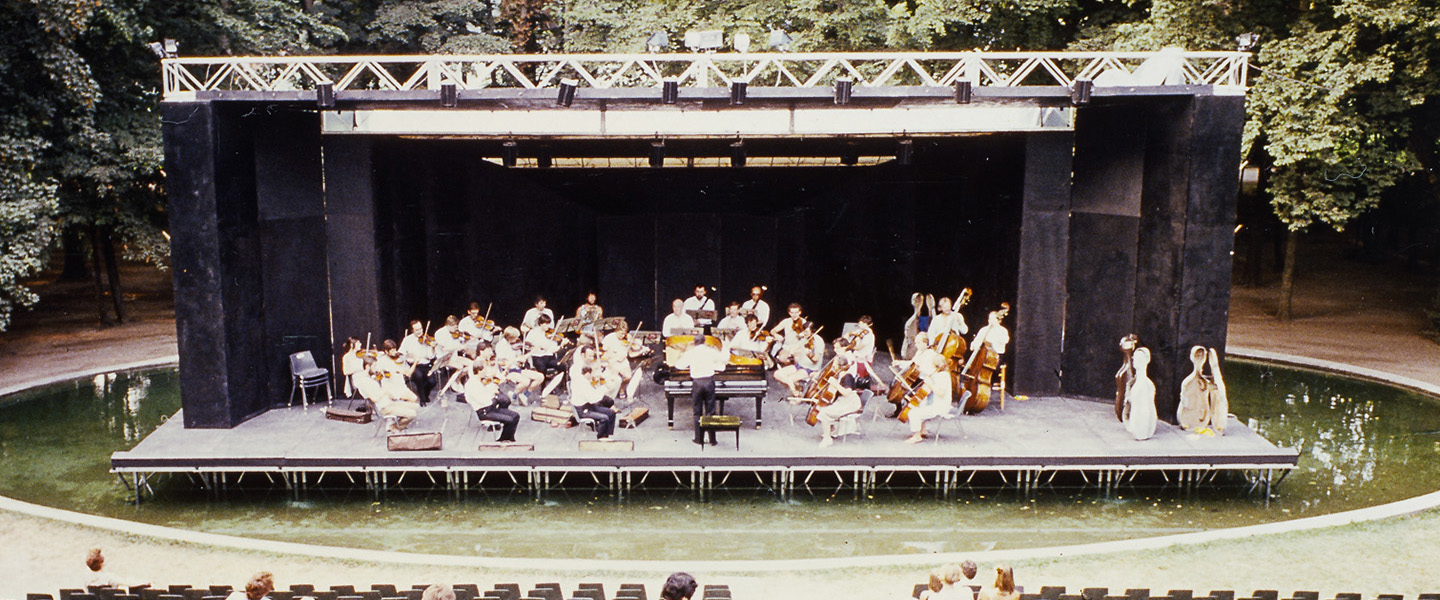
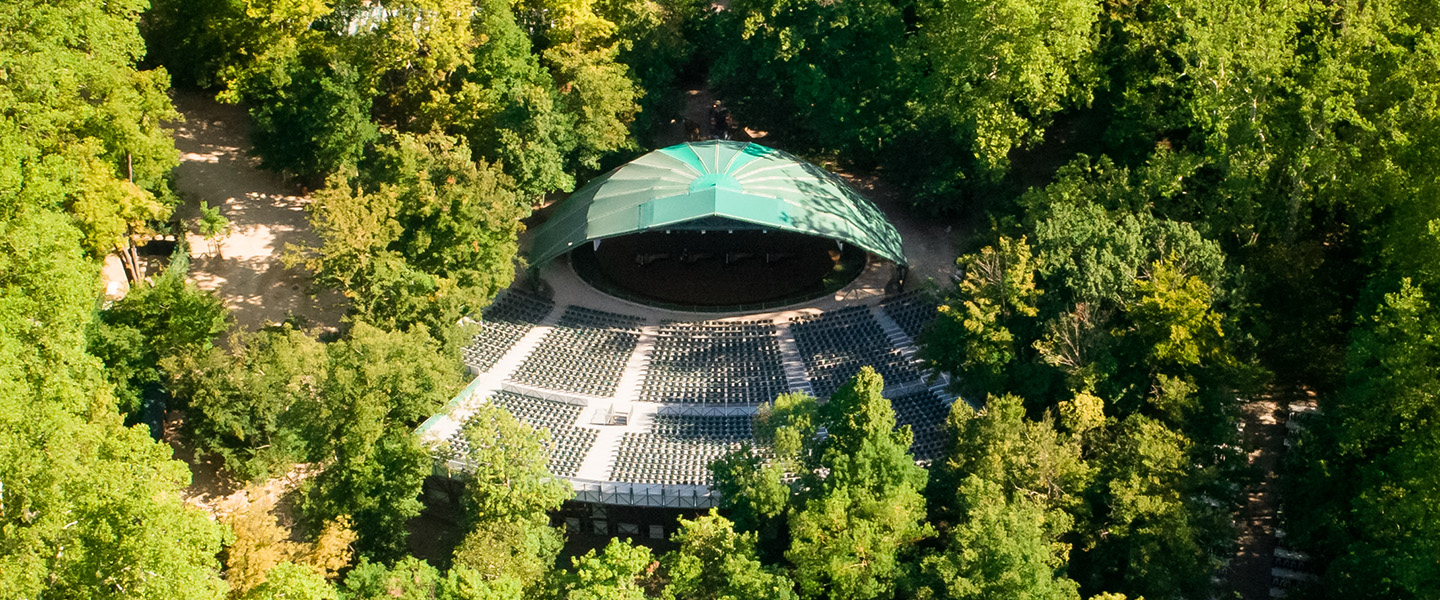
In order to provide the artist the best professional environment and the public with the best acoustics, the Festival has made major investments since its second year of operation:
- 1982: creation of an acoustic shell
- 1983: creation of rehearsal studios
- 1984: installation of 1400 seats in bleachers
- 1987: construction of a second acoustic shell to accommodate philharmonic orchestras
- 1990 : elevation of the acoustic shell for wind instruments
- 1999 : purchase of new bleachers (1850 seats)
- 2002 : enlargement of the stands (2300 seats)
- 2007: construction of a new acoustic shell (300m2 span, 28m wide x 14m high, 122 acoustic panels)
- 2010 : investment in new, more spacious and comfortable stands (2020 seats)
- 2016: construction of new stands for the shops
Governance
The Festival was originally built through a long-standing collaboration between the Onoratini family and artistic director René Martin. Its early decades were deeply shaped by the vision of Paul Onoratini, who led the Festival until his death in January 2010.
In 2007, his son Jean-Pierre Onoratini became President of the Festival, supported by his brother Michel Onoratini as Vice-President. In 2014, Michel Onoratini succeeded him as President. At the end of 2016, Jean-Pierre Onoratini once again assumed the presidency, alongside his sister Marie-Claude Alcaraz, who had already been involved for several years on the Board of Directors and became Vice-President Delegate.
In June 2023, ownership of the Park of the Château de Florans was transferred to an endowment fund in order to secure the long-term sustainability and development of the Festival. Jean-Louis Blanc was appointed President of the Association, while Marie-Claude Alcaraz remains a member of the Board of Directors.
In December 2025, the Festival’s artistic direction is now entrusted to an artistic committee. This collective governance marks a new chapter in the Festival’s history, while reaffirming its commitment to artistic excellence. The 46th edition, in 2026, will reflect this renewed and ambitious artistic orientation.
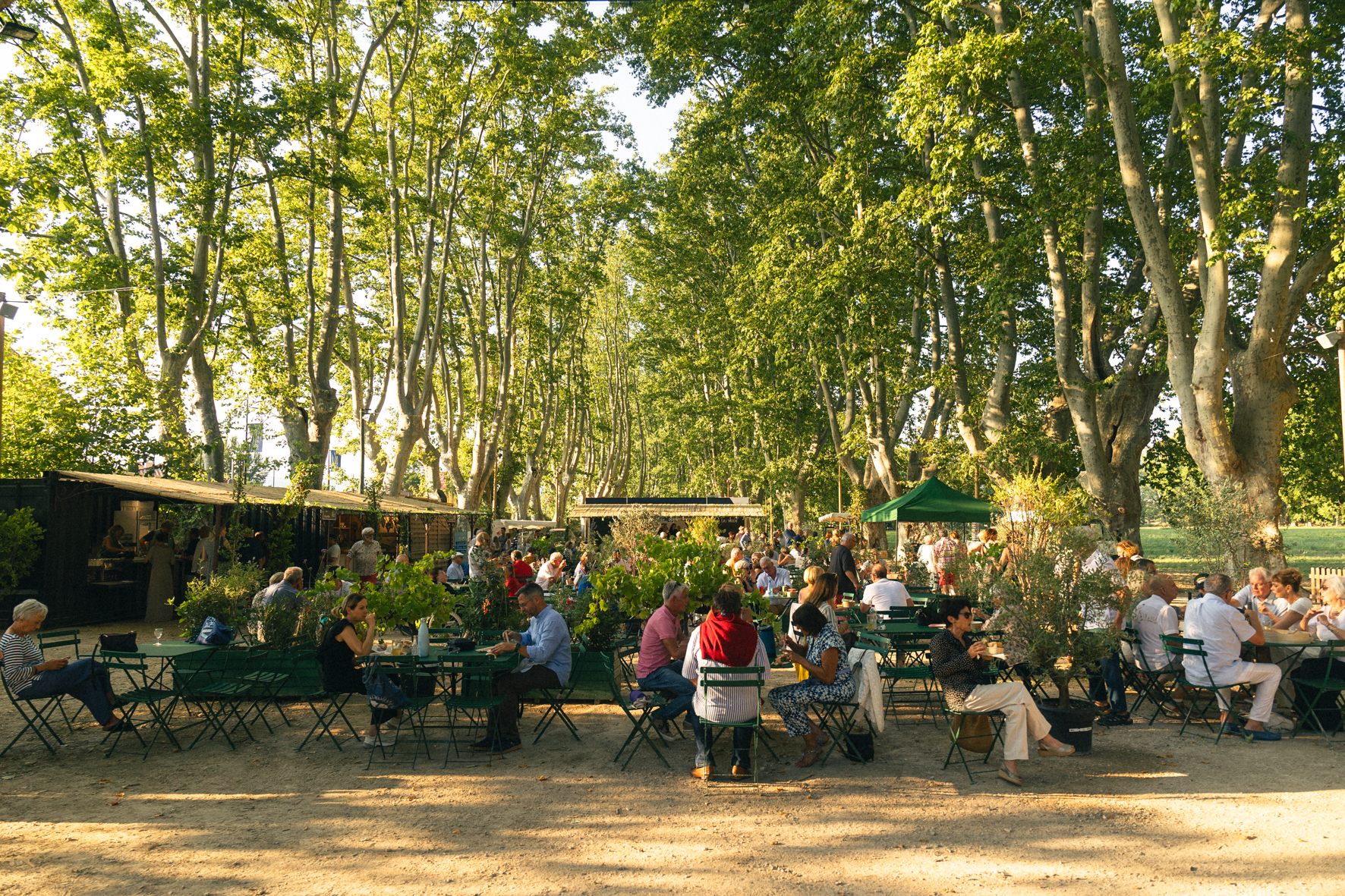
Over the years, the International Piano Festival of La Roque d’Anthéron has established itself as a major reference on the international classical music scene. Its artistic project, developed over several decades, has contributed to the Festival’s international reputation and to the diversity and excellence of its programming.
Thanks to a close collaboration between the artistic direction and the Festival’s governance, La Roque d’Anthéron has continued to grow while remaining faithful to its founding values: a spirit of simplicity in welcoming artists and audiences alike, the highest standards in concert quality and technical facilities, and the unwavering commitment of a large community of dedicated volunteers who form the very heart of the Festival.
The years 2020 and 2021 were particularly challenging for the cultural sector. In this context, the Festival welcomed 30,945 spectators in 2020 and 43,530 in 2021. These figures testify to the strength of the Festival’s bond with its audiences and to its capacity for resilience, laying the foundations for a renewed and ambitious future for this exceptional human and artistic adventure.